
Introduction
Kitulo National Park is one of Tanzania’s most unusual protected landscapes. On its high plateau in the Southern Highlands, the attraction is not a Big Five game drive but a changing tapestry of grasslands, seasonal flowers, birdlife and walking country. Choosing when to go matters because the same plateau can look lush and colourful during the rains, then cooler and more subdued later in the year. If your main reason for visiting is to see wildflowers, plan differently from someone whose priority is hiking, wide views or a quiet highland escape.
The short answer: when should you visit?
For seasonal wildflowers and orchids, the broad window to consider is December to April, with the display depending on rainfall and the timing of individual species. For walking with potentially less muddy ground, consider the drier months, while remembering that the plateau can be cold, windy or misty. There is no guaranteed 'peak bloom' date: weather varies from year to year, and even different parts of the plateau may flower at different times. A flexible itinerary is more useful than a promise that one particular week will be perfect.
Understanding Kitulo’s highland climate
Kitulo sits at roughly 2,600 metres above sea level, so it feels very different from the warm lowlands of Tanzania. Conditions can change quickly, with rain, low cloud, wind and chilly mornings possible even when the weather looks promising at the start of the day. The rainy season generally brings greener grassland and flowering plants, but also slippery trails and more difficult road access. Drier periods can be easier for some walks, although flowers may be fewer and the air can feel cold. Treat these patterns as seasonal guidance, not a day-by-day forecast.
December to February: emerging colour and rainy-season landscapes
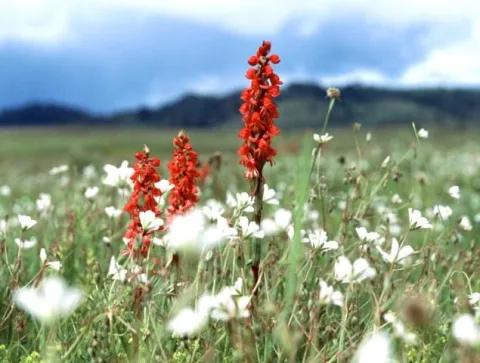
As the rains establish themselves, Kitulo’s grasslands begin to transform. Visitors interested in flowers may find orchids and other flowering plants, but the exact mix changes through the season. Clouds and rain can make photography atmospheric, with soft light over the rolling hills, while also limiting distant views. Pack waterproof outerwear and footwear with good grip. Leave enough time in your schedule for slower driving and changes to planned walks. A local guide can help you identify plants without stepping off appropriate routes or disturbing sensitive areas.
March to April: a strong period to consider for flowers
March and April are often discussed as promising months for the plateau’s floral displays, although the timing and intensity vary with the rains. If photographing wildflowers is your main objective, these months can be worth considering, but do not assume every species will be in bloom together. Trails may be wet and mist may roll in without much warning. Build your day around shorter walks, careful observation and the conditions on the ground rather than attempting to cover long distances at all costs.
May to August: cooler conditions and a different kind of visit
As the main rains ease, the grassland appearance changes and the most dramatic flower displays generally diminish. Visitors may still appreciate birdwatching, hiking and the sense of space, but the plateau can be especially chilly and misty. Early starts require warm layers; clear views should be treated as a bonus rather than a certainty. If your trip falls in this period, make the landscape and walking experience the main purpose of the visit instead of advertising it as a peak wildflower tour.
September to November: walking, scenery and the transition to rains
These months can appeal to travellers who want to explore the highlands without organising the entire trip around flowers. Grassland colours may be more muted before the main rains, and early showers can arrive at different times each year. Walking conditions vary, so ask about current access rather than assuming all trails are dry. For visitors combining Kitulo with other destinations in Southern Tanzania, this period may offer useful flexibility, but travel times between parks still need careful planning.
Month-by-month planning at a glance
| Month | What to expect | Keep in mind |
|---|---|---|
| January | Wet-season grasslands; flowers may be present | Rain and muddy routes |
| February | Seasonal flowers and photography | Variable bloom and cloud |
| March | Often a promising flower-focused period | Wet trails and changeable visibility |
| April | Late rainy-season flowers may continue | Rain and access checks |
| May | Transition toward drier conditions | Cooler weather; fewer flowers |
| June | Highland walking and scenery | Cold mornings and possible mist |
| July | Quiet plateau landscapes | Cold, wind and limited flowers |
| August | Walking and birdwatching opportunities | Chilly conditions |
| September | Drier-season scenery and walks | Flower displays generally limited |
| October | Highland exploration before main rains | Conditions vary with early showers |
| November | Seasonal transition; possible fresh growth | Rainfall onset unpredictable |
| December | Rains and potential early flowering | Wet roads and variable bloom |
Best time for orchids and wildflower photography
The most useful approach is to aim within the rainy-season flowering window and ask locally about the current bloom before confirming your exact dates. Some flowers are small and close to the ground, so a slow walking pace is better than trying to rush between viewpoints. A phone with a close-focus mode or a macro lens can help. Shoot from established paths where possible, avoid picking flowers, and never trample plants to obtain a photograph. Rain protection for cameras and a cloth for wet lenses are practical additions.
Best time for hiking and birdwatching
Walking is possible at different times of year, but the best day depends on trail conditions, visibility, your fitness and the route approved by park staff. Wet-season walks may be particularly beautiful but slippery; cooler months call for more warm clothing. For birdwatchers, habitat and seasonal movements influence what may be seen. Kitulo is known for highland grassland birds, but no specific sighting should be promised. Binoculars, a patient guide and a flexible schedule will generally serve you better than a rigid species checklist.
How many days should you allow?
A two- or three-day plan is sensible for many visitors because Kitulo is not immediately next to the major northern safari gateways. A typical three-day visit could involve a road transfer from Mbeya and an easy introductory walk on the first day, a fuller plateau exploration on the second, and a return transfer on the third. Actual walking time and stops should depend on the weather and park guidance. If you have only one day, check travel distances carefully: a rushed visit may leave little time to experience the landscape.
Getting to Kitulo from Mbeya and the Southern Highlands
Mbeya is a common starting point for trips to the plateau, with onward road travel through the Southern Highlands. Other approaches may be possible depending on your route through the Njombe and Makete areas. The final roads can be affected by rain and maintenance, and journey times depend on the vehicle and conditions. Songwe Airport can be a practical arrival option for the wider Mbeya area, but flight schedules and transfers should be checked separately. Confirm the correct entry arrangements and road status with your operator and Tanzania National Parks before departure.
What to pack in each season
- All year: sturdy walking shoes, water, sunscreen, a hat, binoculars and a small daypack.
- Rainy months: waterproof jacket, dry bag, spare socks and camera rain protection.
- Cooler months: fleece or insulated layer, wind protection and warm clothing for early mornings.
- For photography: a close-focus lens or phone, spare battery and a way to keep equipment dry.
- Before departure: confirm park rules, guiding, access roads and your accommodation arrangements.
Should you combine Kitulo with another Southern Tanzania park?
Yes, if your travel time and budget allow. Kitulo complements classic wildlife areas because it offers a very different experience: flowers, highland walks and botanical interest rather than the game-drive focus of Ruaha or Nyerere. Combining parks requires realistic transfer planning; do not assume they are close simply because they are all described as part of Southern Tanzania. A dedicated Kitulo visit is also worthwhile for travellers who prefer quiet landscapes and walking over a multi-park itinerary.
Responsible travel on the plateau
Kitulo’s delicate plant communities are the reason many visitors come. Stay on appropriate routes, follow ranger or guide instructions, do not remove orchids or other plants, and keep noise and litter to a minimum. Respect local communities and ask permission before photographing people. If conditions are too wet or visibility is poor, changing the walk is part of responsible travel rather than a failed itinerary.
Planning your Kitulo trip with Cruize Wild Safaris
Tell Cruize Wild Safaris your preferred travel month, whether flowers or hiking are your priority, your starting point and how many days you have. We can help plan a practical route around the season and available services, and explain which arrangements need confirmation. Explore our Kitulo National Park destination guide and the 3-Day Kitulo National Park Hiking & Wildflower Tour when those pages are linked on the website. Park fees, transport, accommodation and guiding requirements should always be reconfirmed for your travel dates.
Final recommendation
Choose the December–April period if seeing seasonal flowers is your main reason for travelling, while allowing for rain and uncertain bloom timing. Consider other months for hiking and highland scenery, with realistic expectations about cold weather and fewer flowers. Whatever the season, Kitulo rewards visitors who move slowly, look closely and leave room for the weather to shape the day.